Samosa Ai EPS Illustration Sets: A Focused Evaluation for Designers and Project Managers
Choosing the right illustration pack is more than just picking something that looks good at first glance. For graphic designers, web developers, and brand managers, the long-term utility of a file set comes down to structure, editability, and cross-platform stability. The Samosa Ai EPS collection positions itself as a solution for creative professionals who need clean vector assets that hold up across print, web, app interfaces, and informational graphics. This evaluation looks closely at what the set offers, where it excels, and where alternative formats or approaches might be more practical for your specific workflow.
What the Samosa Ai EPS Collection Actually Provides
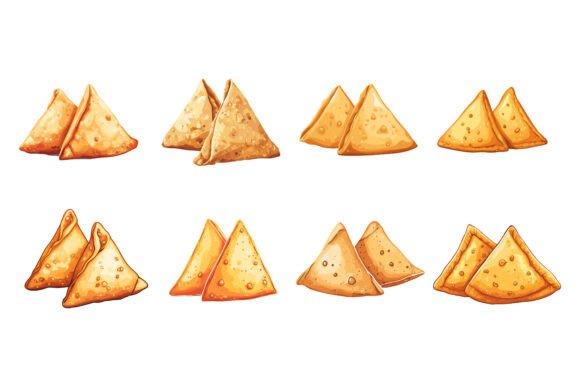
At its core, this is a curated illustration pack built around vector-based artwork, delivered in industry-standard Adobe Illustrator (AI) format, paired with Encapsulated PostScript (EPS) and standard JPG previews. The illustration style leans toward crisp, modern iconography and symbolic visuals that fit neatly into infographics, mobile app screens, instructional layouts, and marketing collateral.
The collection is packaged with both Mac and Windows users in mind, which immediately signals that the designers behind Samosa understand the reality of mixed operating system environments. Many design teams operate with some workstations on macOS and others on Windows, and file compatibility can become a friction point if not addressed from the start. The inclusion of AI as the primary working file means full editability inside Adobe Illustrator, while EPS provides a fallback format that opens reliably across older software versions and alternative vector editing tools like CorelDRAW or Affinity Designer.
What sets this apart from free or mass-market vector packs is the attention to internal file organization. The layer structures are reportedly clean and logically grouped, which matters enormously when you need to isolate specific elements, apply brand color changes, or repurpose a single icon without touching the rest of the composition. This kind of structured approach reduces the time spent ungrouping, relabeling, and hunting through unnamed paths — a hidden cost that many buyers underestimate until they are deep into a project deadline.
Reasons a Professional Might Choose This Set Over Others
The illustration market is saturated, so why would someone specifically evaluate the Samosa pack? Several practical scenarios come to mind:
- Consistency across deliverables: If you need icons that share uniform stroke weights, corner radii, and optical balance, a single well-maintained set outperforms stitching together disparate free downloads.
- Color customization requirements: Brand projects demand fast recoloring. Since these are vector-based in AI, you can quickly apply global color swatches and see changes ripple through the entire illustration set without manual point-by-point edits.
- Multi-format output demands: You might need the same illustration rendered at billboard scale for a trade show booth, at icon dimensions for a mobile nav bar, and as a crisp infographic element in an annual report. The vector foundation handles all three without degradation.
- Team workflows: A well-structured file means multiple designers can work with the assets without breaking the organization. The layered approach described in the Samosa Ai EPS set suggests the creators anticipated shared use cases.
Benefits and Tradeoffs You Should Weigh Before Buying
No single resource fits every scenario, and an honest evaluation means looking at both the strengths and the limitations. Here is what you gain and what you may need to work around.
Benefits
- Editability at depth: Unlike flattened JPGs or PNGs, AI files let you access every anchor point, every curve, and every compound path. If an icon needs to be simplified for tiny display sizes or exaggerated for a hero graphic, you have full control.
- Time savings from organization: The emphasis on a neat file and layer structure means less clean-up work. For production artists who bill hourly or juggle tight turnaround times, this can translate directly into cost efficiency.
- Cross-software compatibility: EPS files can be placed into older print workflows, imported into non-Adobe layout applications, and shared with collaborators who may not have a current Creative Cloud subscription.
- Perfection in details: When a set is marketed as having attention to detail, it typically means smooth curves, no awkward tangents, and optically adjusted spacing — things that become glaringly obvious when an illustration is scaled up.
Tradeoffs and Considerations
- Software dependency for full editing: While EPS is widely supported, deep editing really shines inside Adobe Illustrator. If your primary tool is Figma, Sketch, or Canva, you will either need to convert and simplify the artwork or accept some loss of editability.
- Style lock-in: The pack has a defined aesthetic. If your project requires multiple illustration styles — say, hand-drawn organic line art for one section and isometric tech graphics for another — you will likely need supplementary packs. No single set covers every stylistic range.
- Learning curve for layer-heavy files: While the organization is a benefit, it also assumes the user understands how to navigate complex Illustrator files. Someone new to vector editing might still find the structure overwhelming initially.
- File size and system resources: Highly detailed vector packs with many artboards and embedded previews can become heavy. Older machines may experience lag when opening and navigating the master files.
When the Samosa Collection Is a Strong Fit
This kind of illustration set aligns particularly well with certain project profiles. If you are working on a brand identity system that will be rolled out across signage, stationery, social media templates, and an app interface, the consistency and global editability become critical. You can recolor the entire set to match a new palette in minutes, then export appropriate formats for each channel.
It is also a strong candidate for infographic-heavy content marketing. Teams producing regular data visualization blog posts, white papers, or slide decks benefit from having a reliable visual vocabulary that doesn't require commissioning new illustrations for every campaign. Because the Samosa Ai EPS files are described as suitable for infographics right out of the box, the time-to-publish can drop significantly.
For UI/UX designers building symbol libraries or icon systems, the structured layers mean you can pull individual icons into your design system documentation, normalize the sizing, and ensure alignment with your component guidelines. The flexibility to modify shapes easily means you can adapt general icons into context-specific variants without starting from scratch.
Situations Where Alternatives May Be Worth Considering
There are contexts where a dedicated AI / EPS pack might be overkill or the wrong tool altogether. If your primary output is raster-based and heavily stylized — for instance, photo-collage social media graphics or textured digital painting — the crisp vector look may clash with your aesthetic rather than complement it.
Teams working exclusively in Figma or Canva might find that converting AI and EPS files introduces unnecessary steps. While you can import and vectorize, the result is not always pixel-perfect to the original without manual adjustment. In such cases, an SVG-native pack or a Figma component library might integrate more smoothly into the daily workflow.
If your project requires animation-ready assets, you will want to check how the files are constructed. Complex compound shapes can become problematic when imported into After Effects or Lottie workflows. You may need to simplify or restructure certain elements, which eats into the promised time savings. Some animation studios prefer purchasing assets already optimized for motion, even if the initial style selection is narrower.
One-off small projects may not justify the expense or the time spent learning the file structure. A single flyer or a one-time presentation template might be served perfectly well by free, high-quality open-source icon sets. The value of a paid, well-organized pack compounds more clearly across multiple projects over time.
Practical Decision-Making Insights
Before committing to the Samosa Ai EPS collection or any similar illustration pack, run through a short internal checklist against your current and upcoming project pipeline:
- How many deliverables will actually use these illustrations? If the answer is three or more distinct outputs (a website, a printed brochure, an app screen, and a pitch deck, for example), the per-use cost drops sharply and the consistency becomes a brand asset in itself.
- Who on the team will handle asset customization? If that person is comfortable in Adobe Illustrator, you unlock the full value of the layered AI file. If not, factor in a small learning investment or a handoff process.
- Does the illustration style match the tone of voice? A mismatch here will create subtle friction in your designs. Review the available previews (the JPG files included serve this purpose) carefully against your existing brand mood boards.
- Will you need to share source files with external partners? The EPS format provides a safer, more universal handoff format, and the cross-platform Mac and Windows support reduces technical support questions from vendors.
- What is your tolerance for file management? A neatly organized pack only stays neat if you maintain that organization when saving out derivative files. Build a habit of duplicating and renaming files before heavy modification.
Setting Realistic Expectations for Any Vector Illustration Purchase
Even the most meticulously crafted pack requires some level of adaptation. The promise of being able to change colors and modify icons easily is accurate — vector editing makes those tasks technically straightforward — but the ease depends on your familiarity with the tools. If you expect to hand the file to a junior designer and have instant brand-aligned results, plan for a brief orientation to the layer structure and global color setup.
Print users should also verify that color spaces and overprint settings align with their production requirements. While the illustrations are described as suitable for print, always do a test export to PDF with your print provider's specifications, especially if you are using spot colors or specialty finishes.
The combination of AI, EPS, and JPG in one download is practical: JPGs give you immediate lightweight previews and placeholders, AI gives you the master working file, and EPS extends compatibility to older or alternative software. This multi-format approach reflects an understanding of real production environments rather than a theoretical ideal.
Ultimately, the Samosa Ai EPS set appears designed for professionals who value control, consistency, and long-term reusability. The emphasis on structured files and cross-platform support addresses genuine workflow pain points. Like any creative resource, its true worth is measured by how seamlessly it integrates into your actual projects and how much it reduces the repetitive labor of asset creation. Evaluate it against your specific output needs; if the stylistic match and technical requirements align, it can become a dependable component of your design toolkit rather than a one-time download that collects digital dust.