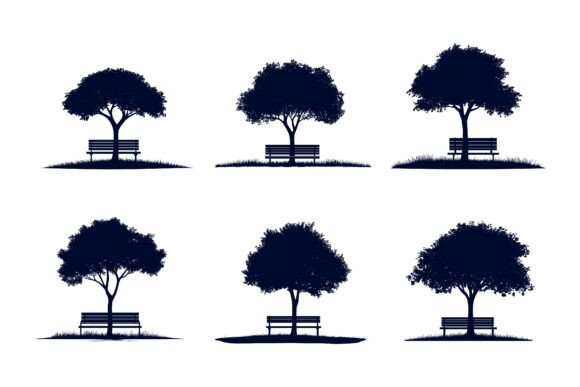
Why Trees with Leaves Illustrations Are Quietly Reshaping Modern Visual Design
There is a subtle but unmistakable shift happening across digital and print media. Organic motifs, and specifically Trees with Leaves, are appearing everywhere—from app onboarding screens and sustainability reports to wellness branding and editorial infographics. What was once a simple decorative element has evolved into a versatile visual asset that carries layers of meaning, emotional resonance, and functional adaptability. For professionals who rely on high-quality illustration sets, understanding this shift is not just about aesthetics. It is about recognizing a tool that can accelerate workflows, deepen audience connection, and reflect broader cultural currents—all while remaining remarkably easy to customize and deploy.
The Growing Demand for Nature-Inspired Visual Language
Over the past several years, the creative industry has witnessed a pronounced turn toward nature-inspired imagery. This is not a fleeting trend confined to a single sector. It spans technology interfaces, healthcare communications, financial services branding, educational materials, and lifestyle products. The reasons are layered and interconnected. On one level, audiences are increasingly drawn to visual cues that signal growth, renewal, stability, and interconnectedness—qualities that Trees with Leaves communicate almost instinctively. On another level, designers and marketers are operating in an environment where differentiation is harder to achieve, and organic elements offer a refreshing contrast to the geometric minimalism that dominated the previous decade.
What makes the current moment particularly interesting is how accessible these visual assets have become. In earlier eras, obtaining a cohesive, professionally crafted set of tree illustrations meant commissioning custom work or settling for fragmented stock imagery. Today, curated collections—especially those delivered in robust formats like AI, EPS, and JPG—put an entire visual system into the hands of a designer, marketer, or entrepreneur within minutes. The implications for creative efficiency are substantial.
Beyond Decoration: Trees as Functional Design Elements
It would be easy to dismiss tree illustrations as purely ornamental. But practitioners who work with them regularly understand that Trees with Leaves function as far more than background decoration. They serve as visual anchors in complex layouts. They guide the eye through information hierarchies. They act as metaphors in data storytelling. A well-placed tree illustration can soften a dense infographic, add warmth to a user interface, or provide an instantly recognizable symbol for categories like environmental impact, family heritage, or organizational growth.
Consider a sustainability report published by a mid-sized company. The document must convey data credibility while also expressing genuine commitment to environmental values. Stock photography of forests might feel generic or staged. A custom illustration set featuring Trees with Leaves, however, can be tailored to the brand's palette, scaled for different sections, and used consistently across print and digital formats. The result is a document that feels cohesive, intentional, and professionally crafted—without the lead time and cost of bespoke illustration work.
The Efficiency Argument That Creative Teams Appreciate
Time pressure is a constant in creative professions. Marketing campaigns have compressed timelines. Product launches demand rapid iteration. Freelancers juggle multiple client expectations simultaneously. In this context, illustration resources that are neatly organized with thoughtful file and layer structure become more than a convenience—they become a competitive advantage. When every element is logically named, grouped, and separated into editable layers, the speed of customization increases dramatically. Designers can isolate a single leaf cluster, recolor a trunk texture, or scale a canopy without disturbing the rest of the composition.
This structural clarity matters especially for teams that span different skill levels. A senior creative director might dive deep into layer-level modifications, while a junior designer or a marketing coordinator can still achieve polished results by adjusting top-level elements. The best illustration collections anticipate both use cases, and that architectural thoughtfulness is often what separates professional-grade assets from amateur alternatives.
How Cross-Platform Compatibility Changes the Equation
Another development that has quietly reshaped the illustration market is the expectation of true cross-platform compatibility. Creative teams today are rarely homogeneous in their tooling. A design department might primarily work on Mac, while a client's internal marketing team operates on Windows. A freelance illustrator might deliver source files that a web developer then needs to reference for CSS animations. The friction that arises from format incompatibility can derail timelines and introduce unnecessary frustration.
This is why illustration sets explicitly designed for Mac and Windows users carry practical weight. When an AI or EPS file opens cleanly across operating systems, with fonts outlined, paths intact, and layer structures preserved, the collaborative workflow remains smooth. Add a universally accessible JPG preview or raster version, and the asset becomes usable even for non-design stakeholders who need to drop visuals into presentations, social media graphics, or internal documents. This kind of format flexibility reflects an understanding of how modern creative work actually gets done—across platforms, across teams, and across varying levels of technical expertise.
The Deeper Appeal: Why Audiences Respond to Trees with Leaves
Beyond the practical considerations, there is a psychological and cultural dimension worth exploring. Humans have a well-documented affinity for natural forms—a phenomenon researchers describe as biophilia. Studies in environmental psychology have consistently shown that exposure to nature imagery, even in representational form, can reduce stress, improve focus, and generate positive emotional responses. For brands and content creators, this is not merely academic trivia. It is actionable insight.
When a fintech app uses a stylized Trees with Leaves illustration in its onboarding flow, it is doing more than decorating empty space. It is introducing an organic counterpoint to the often cold, transactional feel of financial interfaces. When a healthcare provider incorporates tree motifs into patient education materials, it taps into metaphors of growth, healing, and rootedness. When a SaaS company illustrates its feature ecosystem with branching tree structures, it makes abstract relationships feel tangible and natural. The motif works across contexts because it carries universal associations while remaining flexible enough to absorb brand-specific meaning.
Consistency and Detail: The Markers of Professional Illustration Work
One of the less obvious but critically important qualities in any illustration collection is consistency in detail. A set might look impressive at first glance, but upon closer inspection reveal mismatched stroke weights, inconsistent lighting angles, or stylistic drift between components. These subtle discrepancies compound when illustrations are placed side by side in a presentation, website, or printed spread. The viewer may not consciously identify the problem, but the overall impression will feel slightly off—less polished, less intentional.
High-quality Trees with Leaves collections maintain rigorous consistency. Every leaf rendering follows the same geometric logic. Color gradients behave predictably. Negative space is managed with equal care across simple and complex compositions. This level of detail is not an accident. It is the product of an illustrator or team that understands how professional designers will use the work—layering, combining, and scaling elements in ways that amplify any inconsistency. When the foundational illustrations are rock-solid, the designer's job becomes one of creative assembly rather than constant correction.
Editability as a Strategic Advantage
The ability to change colors and modify icons easily is often framed as a convenience feature. But for many professionals, it is closer to a strategic necessity. Brand guidelines evolve. Campaign themes shift. A seasonal promotion may demand a different palette than the core brand identity. When an illustration set locks designers into a single color scheme or a rigid style, its useful lifespan shortens considerably. Conversely, when the underlying vector artwork is constructed with editability in mind—using global color swatches, unflattened shapes, and modular component structures—the same illustration set can serve multiple campaigns, products, or even different brands over time.
This extensibility is especially relevant for agencies and freelancers who serve diverse clients. Purchasing a versatile Trees with Leaves collection once and adapting it across projects for a sustainability nonprofit, a children's educational app, and a organic food brand represents an extraordinary return on investment. The key lies in the foundational design decisions made by the illustrator—decisions about how shapes are constructed, how layers are organized, and how easily components can be isolated and recombined.
Applications That Extend Beyond the Obvious
While tree illustrations naturally align with environmental and wellness contexts, their applicability extends much further. Suitable for print, web, symbols, apps, and infographics, these visual assets find their way into unexpected places. UX designers use simplified tree icons to represent hierarchical data structures in dashboard interfaces. Event organizers incorporate leafy motifs into conference materials to communicate growth and community. Product designers embed tree illustrations into packaging to signal natural ingredients or sustainable sourcing practices. The versatility stems from the motif's inherent flexibility—a trunk with leaves can be stylized to feel corporate, playful, minimal, or ornate depending on the treatment applied.
Infographics represent a particularly compelling use case. Data visualizations often struggle to balance analytical clarity with visual engagement. Introducing Trees with Leaves as metaphorical framing elements—for instance, using tree growth stages to represent business milestones or using branching patterns to illustrate organizational structures—adds a layer of conceptual resonance that pure charts and graphs lack. The illustration does not replace the data; it contextualizes it, making the information more memorable and the narrative more compelling.
What This Means for the People Who Create and Commission Visual Work
For the independent designer, the availability of polished, editable illustration sets reduces the friction between creative vision and finished output. It allows more time to be spent on conceptual development, layout refinement, and client communication—activities that add disproportionate value—rather than on the laborious construction of base-level vector artwork. For the entrepreneur or small business owner without a dedicated design team, these collections democratize access to professional-grade visuals that would otherwise require significant financial outlay or technical training.
For marketing professionals, the consistency and flexibility of a well-built illustration set translates directly into brand coherence. Every touchpoint—from the website hero section to the printed brochure to the mobile app icon—can draw from the same visual vocabulary. Over time, audiences internalize these visual cues, and the Trees with Leaves motif becomes a subtle but powerful component of brand recognition.
The broader market context supports this shift. The global illustration market has expanded significantly, driven by the proliferation of digital content, the rise of remote collaboration, and the growing expectation that brands maintain a distinctive visual presence across multiple channels. In this landscape, illustration assets that combine aesthetic quality with practical usability are not just nice to have—they are foundational resources that enable faster creation cycles, more consistent branding, and more emotionally resonant communication.
Moving Forward with Intention
What makes a particular illustration collection genuinely valuable is not the number of files it contains or the marketing language that surrounds it. It is the thoughtfulness embedded in every design decision—the way shapes are constructed to remain editable, the way layers are named to make navigation intuitive, the way consistency is maintained to ensure that every element works harmoniously with every other element. Trees with Leaves as a theme happens to sit at the intersection of aesthetic appeal, psychological resonance, and functional versatility. But the real story is about how well-crafted visual tools empower professionals to do their best work with less friction and greater creative freedom.
For those who create, commission, or curate visual content, the opportunity is clear. Investing in illustration resources that prioritize organization, editability, and cross-platform compatibility is not an expense—it is a strategic decision that pays dividends across projects, campaigns, and the evolving demands of a visually sophisticated audience. The trees, with their leaves and branches and rooted trunks, simply provide a fitting metaphor for the kind of growth-minded, adaptable, and deeply grounded creative practice that today's professional landscape rewards.