The Enduring Magic of Child Painting and Its Place in Modern Visual Storytelling
Few forms of expression carry the unfiltered honesty of a child painting. There is something profoundly captivating about the way a young mind translates imagination onto paper — bold strokes, unexpected color combinations, and shapes that defy conventional proportion yet communicate emotion with startling clarity. For centuries, artists and designers have drawn inspiration from this raw creative energy, recognizing that children perceive and depict the world through a lens unclouded by rigid technique or self-consciousness. Today, that same spirit influences everything from children's book illustrations and educational materials to branding campaigns and digital product design.
Understanding what makes child-created artwork so compelling requires looking beyond the surface. It is not merely about crayon scribbles or finger-painted rainbows. It is about the cognitive and emotional processes that unfold when a child grips a brush and makes decisions — consciously or intuitively — about color, form, and narrative. Researchers in developmental psychology have long noted that painting helps children process experiences, articulate feelings they cannot yet verbalize, and build fine motor skills. But the broader creative industry has taken note as well, recognizing that the aesthetic qualities of children's art — its spontaneity, its imperfection, its joyful disregard for rules — hold immense commercial and communicative value.
Why Child Painting Resonates Across Audiences and Disciplines
The visual language of childhood art transcends cultural and linguistic boundaries. A child painting of a house, a tree, or a family unit communicates universally because it taps into shared human developmental stages. This universality makes child-inspired imagery exceptionally versatile. Graphic designers working on projects for pediatric healthcare brands often lean into hand-drawn, childlike illustration styles to evoke warmth and approachability. Educational publishers incorporate similar aesthetics to make learning materials feel less intimidating and more inviting for young learners.
Consider the emotional spectrum that child art covers. A bright, messy painting of a sunny day with oversized flowers radiates joy and optimism — perfect for a nursery brand or a children's app interface. Conversely, a darker, more chaotic piece might reflect confusion or frustration, qualities that can be harnessed thoughtfully in awareness campaigns or therapeutic materials. The authenticity embedded in these visual expressions is difficult to replicate through overly polished, corporate design language. Audiences recognize and respond to genuineness, which is precisely what childlike illustration delivers when applied with intention and respect.
Translating Organic Artistry into Scalable Digital Assets
For working designers and content creators, capturing the essence of child-created art while maintaining professional usability presents a unique challenge. Scanning a physical painting and placing it into a layout may work for one-off projects, but modern workflows demand flexibility, scalability, and editability. This is where thoughtfully constructed vector illustration collections enter the picture. A well-organized set of illustrations inspired by childhood themes can serve as a bridge between organic artistic expression and commercial production requirements.
When evaluating digital illustration resources, professionals look for several key characteristics. First, the file format must support cross-platform compatibility. Many designers operate on Mac systems while collaborating with teams on Windows machines, so formats that function seamlessly across both environments eliminate friction. Second, the internal structure of the files matters significantly. Layers should be named logically, grouped coherently, and organized in ways that make navigation intuitive even for someone encountering the file for the first time. Third, the attention to detail within each illustration — consistent line weights, harmonious color palettes, and cohesive styling — determines whether the assets can be used across multiple projects without looking disjointed.
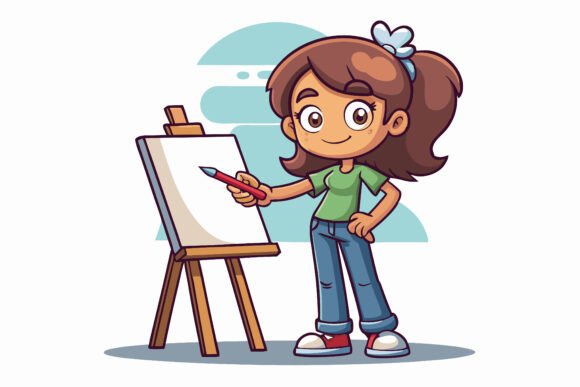
Another critical consideration is versatility. An illustration of a child painting activity scene, for instance, might be used on a website banner, a printed brochure, a mobile app onboarding screen, or an infographic about early childhood development. The same artwork might need to appear in drastically different sizes and contexts. Vector formats preserve quality at any scale, making them indispensable for designers who work across print and digital media simultaneously. Color customization is equally important. A school might need the illustration's palette adjusted to match its branding, while a blog author might want to tone down certain hues for better readability against a specific background.
The Anatomy of a Practical Illustration Collection
High-quality illustration sets distinguish themselves through meticulous organization and thoughtful construction. Designers who have spent hours untangling poorly labeled layers in inherited files understand the value of neatness. When files and layers follow consistent naming conventions and logical hierarchies, the creative workflow accelerates rather than stalls. This is especially true in collaborative environments where multiple team members might need to access and modify the same assets.
Perfection in details and consistency across a collection should never be underestimated. A set of illustrations that shares a unified stylistic language — whether that means consistent stroke styles, a coherent color theory approach, or harmonious proportional relationships — allows designers to mix and match elements across documents without visual dissonance. Consistency does not mean monotony; it means that every piece feels like it belongs to the same family. This cohesion elevates the professional quality of any project that incorporates these visuals.
Suitability across diverse applications further defines a collection's usefulness. Print projects demand high resolution and appropriate color profiles, typically CMYK for offset or digital printing. Web applications require RGB color spaces and often benefit from lighter, optimized file sizes. Symbols and icons derived from the same illustration set can populate mobile applications and user interfaces. Infographics and data visualization projects might pull individual elements from larger compositions to create custom explanatory graphics. A truly practical illustration resource anticipates these varied needs and provides materials that adapt without degradation.
Creative Freedom Through Editability
One of the most valued features in digital illustration assets is editability. The ability to open a file, select individual elements, change their colors, resize components independently, or modify shapes to suit specific requirements transforms a pre-made illustration from a static purchase into a creative springboard. This flexibility is particularly relevant when working with themes related to childhood and creativity. A designer creating a campaign for an art therapy program might start with a base illustration of children engaged in creative activities and then customize everything from skin tones and hair colors to the specific art supplies depicted, ensuring the final image authentically reflects the community being served.
This level of control empowers designers to maintain brand consistency while still benefiting from professionally crafted starting points. It also extends the lifespan of the purchased assets. Rather than using an illustration once and finding it unsuitable for future projects due to stylistic or color constraints, editable files can be reimagined repeatedly. The initial investment yields ongoing returns across countless projects, a reality that budget-conscious creative directors and freelance designers alike can appreciate.
Bridging the Gap Between Nostalgia and Professional Execution
There is a nostalgic dimension to child painting aesthetics that marketers and content strategists understand well. Adult audiences often respond emotionally to imagery that evokes memories of their own childhoods or reminds them of the children in their lives. This nostalgic pull can be a powerful engagement driver when applied appropriately. A nonprofit organization advocating for children's arts education might use illustrations that mirror the very creative outputs their programs nurture, creating an immediate, visceral connection between the visual communication and the mission.
At the same time, professionals cannot afford to sacrifice quality for sentimentality. Sentimental appeal must coexist with sharp execution. Blurry scans, inconsistent resolutions, and amateurish compositions undermine credibility even when the intended emotional message lands. This is precisely why digitally crafted illustrations that capture the spirit — but not the technical limitations — of children's artwork occupy such a valuable niche. They deliver the emotional authenticity of a child painting while meeting the rigorous standards of contemporary design production.
Integrating Illustrations Into Diverse Project Types
The practical applications for well-constructed illustration sets extend far beyond obvious contexts like children's books or classroom decorations. Web designers building landing pages for parenting blogs, educational technology startups, or pediatric services find that warm, human-centered illustrations improve user engagement metrics. App developers creating interfaces for children's games or learning platforms require iconography and visual assets that are clear, friendly, and scalable across device resolutions. Infographic designers tasked with visualizing data about early childhood education, literacy rates, or developmental milestones benefit from illustration elements that make statistical information feel more accessible and less sterile.
Print applications remain equally relevant. Brochures, flyers, posters, and magazine layouts all absorb illustrations differently than screens do, and quality vector files ensure that the transition from digital design environment to physical printed piece occurs without loss of fidelity. Event organizers promoting community art fairs, school fundraisers, or creative workshops might incorporate these visuals into everything from social media graphics to large-format banners, maintaining visual consistency across an entire promotional ecosystem.
Making Informed Choices About Creative Resources
Professionals who regularly source illustration assets develop a discerning eye for quality. They examine preview materials critically, looking for evidence of thoughtful construction. They consider whether the artistic style aligns with their typical project requirements and whether the licensing terms support their intended usage. They evaluate the completeness of a collection — does it include enough variations, poses, scenes, and elements to sustain a multi-touchpoint campaign or a series of related projects? They also consider the learning curve: can a new team member open these files and immediately understand how to work with them, or will valuable hours be lost to deciphering organizational chaos?
The intersection of child painting aesthetics and professional illustration design represents a rich territory for creative exploration. It acknowledges that the uninhibited creativity of childhood holds lessons for even the most seasoned designers. It also recognizes that translating that creativity into functional, adaptable, and commercially viable assets requires technical skill, organizational discipline, and a genuine understanding of end-user needs. When those elements converge, the result is a resource that supports meaningful creative work across industries and applications.
Looking Forward With Creative Confidence
As visual communication continues to evolve, the appetite for authentic, emotionally resonant imagery only grows. Audiences have developed sophisticated filters for detecting stock photography and generic graphics that lack soul. In response, the design industry has shifted toward illustration styles that feel handcrafted, personal, and narratively rich. The influence of children's artistic expression on this broader trend is unmistakable. From tech startups using whimsical, hand-drawn icons in their branding to major publishers commissioning illustrators who specialize in childlike, expressive styles, the marketplace has validated what artists and educators have known for generations: there is profound communicative power in the way children see and depict the world.
For those building creative toolkits, investing in high-quality, editable, and thoughtfully organized illustration resources is a strategic decision. It equips designers and content creators to respond to project demands with speed and quality, reducing the friction between concept and execution. Whether the task involves designing a children's hospital welcome guide, creating an engaging e-learning module, or developing a brand identity for an arts education nonprofit, having access to illustrations that combine the warmth of child painting with professional-grade construction makes the work not only easier but also more impactful. The right resources empower creators to focus on what matters most: crafting messages that connect, inform, and inspire.